At a time when cultural sentiment about the state of cinema ping-pongs between “We’re So Back” and “It’s So Over” more rapidly than the ball in a Marty Mauser v. Koto Endo table tennis match, 2025 proved to be a year defined by outstanding films that rose above the surrounding chaos. As has become the norm, anxiety over box office numbers and industry health dominated conversations to a nauseating degree, but—thanks to films like One Battle After Another, Sinners, Weapons, Marty Supreme, and others—movies this year felt like they mattered in a way they haven’t in quite some time.
The year provided us with many galvanizing moments that made film feel relevant and alive once again. Sure, the omnipresent achievement of Barbenheimer in 2023 already showed us that movies still have the ability to take center stage in our crowded cultural landscape, but something felt even more exciting about the success stories of 2025—even if none of them reached the financial heights that Greta Gerwig and Christopher Nolan’s films did two years ago. It’s not about how many people bought a ticket to see Ryan Coogler’s vampire period piece or Paul Thomas Anderson’s tale of washed-up revolutionaries, though; it’s about how viewers were made to feel as they left the theater.
Particularly, the way that some of 2025’s best films resonated with younger moviegoers indicates that a cultural shift may just be beginning. After years of being inundated with social media slop and uninspired streaming fare, audiences are looking for works of art that feel substantial enough to justify the cultural moments they create—moments people earnestly want to take part in. I’ll admit I’m not beating any “trapped in an NYC Filmtwt bubble” accusations when I make these sorts of proclamations. I do still understand that we live in a world where most regular people walking down the street haven’t seen most, or all, of the films I’m about to list as my favorites of the year. But, there is clearly a growing investment and excitement from the people who are showing up, as evidenced by the fact that Gen Z movie theater attendance rose by 25% in 2025.
Of course, there are still the same concerns as always. There are fewer studio releases, box office numbers are down, and it’s cheaper for people to sit on their couch and watch something than it is to go to a movie. Frightening industry developments, like Netflix acquiring Warner Bros., only make the social media crashouts seem more warranted. That is why it is okay to take a victory lap when something like Sinners captures the zeitgeist for a full month, despite bizarre and senseless Variety headlines about the film’s profitability. It is more important to celebrate and champion the works that are resonating with people than ever before. As billionaire losers and AI-loving ghouls continue to actively try to destroy art and flatten culture, we should spend less time complaining and more time propping up films that leave theaters full of twentysomethings electrified by the experience and hopeful about the future of moviemaking. Because, as my list will show, movies are actually doing great. It is the rest of the world that’s a problem.
Here are my ten favorite movies of 2025.
(Honorable Mentions: If I Had Legs, I’d Kick You, Wake Up Dead Man, Two Women, Friendship, Jay Kelly, Highest 2 Lowest, Die My Love, The Secret Agent, Pavements, The Mastermind, Black Bag, Train Dreams, 28 Years Later)
10. No Other Choice

From a craft perspective, it would be a difficult task to find a better-made 2025 movie than No Other Choice. With never-before-seen camera tricks and awe-inspiring visual flourishes, master director Park Chan-wook elevates this story to something beyond a wacky, darkly comedic late capitalism satire. An adaptation of Donald E. Westlake’s The Ax, the story in question centers on a middle-class family man who is pushed to the brink after losing his job at a paper company. Ultimately a critique of how our society conflates self-worth with economic standing, the man—portrayed brilliantly by Lee Byung-hun—is so beaten down by his job search that he turns to murdering his rival candidates in order to secure a position. With such an outsized premise, it would have been easy for this film to feel uneven or tonally confused, but Park showcases complete control of his narrative by seamlessly blending resonant, empathetic drama with absurd, elaborate comedy. By incorporating these contrasting tones, Park allows the audience to connect with the material to an even greater degree. While hopefully none of us can relate to the precise choices that the film’s protagonist makes, his desperation is undeniably recognizable. He is willing to sacrifice his humanity just to have a chance to compete in a rigged system designed to keep people feeling less-than and constantly chasing a false promise of satisfaction. Oh, what fun!
9. Eephus
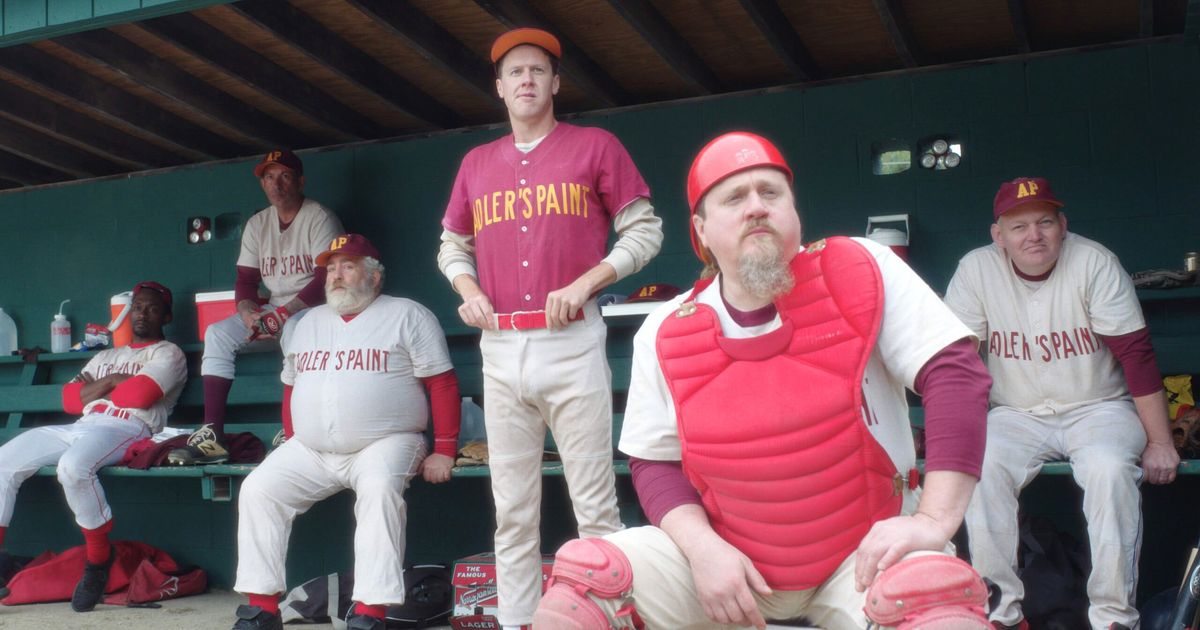
With our tech overlords seemingly doing everything in their power these days to keep us inside and isolated as much as possible, there has been a lot of talk recently about the communal experiences that are being taken away from us. No 2025 touches on the importance of those experiences more than Carson Lund’s nostalgic and heartfelt baseball dramedy, Eephus. A monument to the Hangout Films of yesteryear, Eephus takes place entirely over the course of the final game of a New England men’s rec league in the 1990s, the day before the field these local men play on is set to be demolished. As the game progresses, the audience understands how much this weekly activity means to these players, as they remain committed to keep playing despite losing the necessary light and roster sizes dwindling. A movie about the passage of time, it is a beautiful testament to how, as we age, we strive to hold on to the aspects of our lives that make life worth living. Whether that is going to the movie theater, having a couple pints at a local bar with friends, or getting together with your neighbors to play nine innings of baseball even though you’ve reached middle age and have a hard time making the trot to first base without losing your breath, these things need to be preserved. Eephus understands that (and it will also make you want to call your childhood friends and visit your old baseball diamond with a 12 pack of Narrangsett the second you leave the theater.)
8. It Was Just an Accident

It’s hard to watch It Was Just an Accident and not think about the life of the man who directed it. This story of a group of former Iranian political prisoners trying to determine how—or whether or not to—take revenge on the person they believe to be the guard who tormented them while incarcerated had to be born partly out of Jafar Panahi’s background as an artist who has been targeted and jailed by an authoritarian regime due to the movies he’s made. As someone who has experience filming and releasing movies even though he has been ordered not to, Panahi was able to capture the power and complexities of resistance in It Was Just an Accident better than just about any other director would have been able to. Due to Panahi’s connection with this dark and heavy subject matter, one would not expect this thrilling film to be as funny as it manages to be. Being a master of neorealism, though, Panahi lets his story unfold in a way that feels true-to-life by including the confusion, messiness, and awkwardness that would come with actually making the decisions these characters are faced with. All of that humor leaves the film in the final 20 minutes or so, however, which leads directly into what is probably the best, and definitely the most haunting, ending of 2025—one that reinforces the idea that powerful people thrive in a world where cruelness reigns supreme.
7. Blue Moon

The idea that even as art endures, the artist can fade away, is what drives much of Richard Linklater’s Blue Moon. The film centers on Lorenz Hart, the accomplished lyricist who, together with Richard Rodgers, formed one of the most successful songwriting teams of all time—only to be eclipsed by Rodgers’ later work with Oscar Hammerstein. It takes place almost entirely inside the iconic Theater District staple, Sardi’s, on the opening night of Rodgers and Hammerstein’s Oklahoma! in 1943. Hart initially is shown to be the “smartest guy in the bar” type, someone who engaging in a conversation with would be equally intoxicating and exhausting. As the night progresses, though, we’re able to see the quiet despair that lies beneath Hart’s every word and action. Watching this film is an act of observing someone who knows their best days are behind them, but can’t quite bring themself to accept that yet. Ethan Hawke shines as Hart, filling every scene with the regretful tone that permeates through the entire movie. Perhaps the best recent film about what happens to an artist’s life once they are no longer given the opportunity to create, Blue Moon is a film that will resonate with anyone interested in the harsh realities of the artistic journey.
6. Sorry, Baby
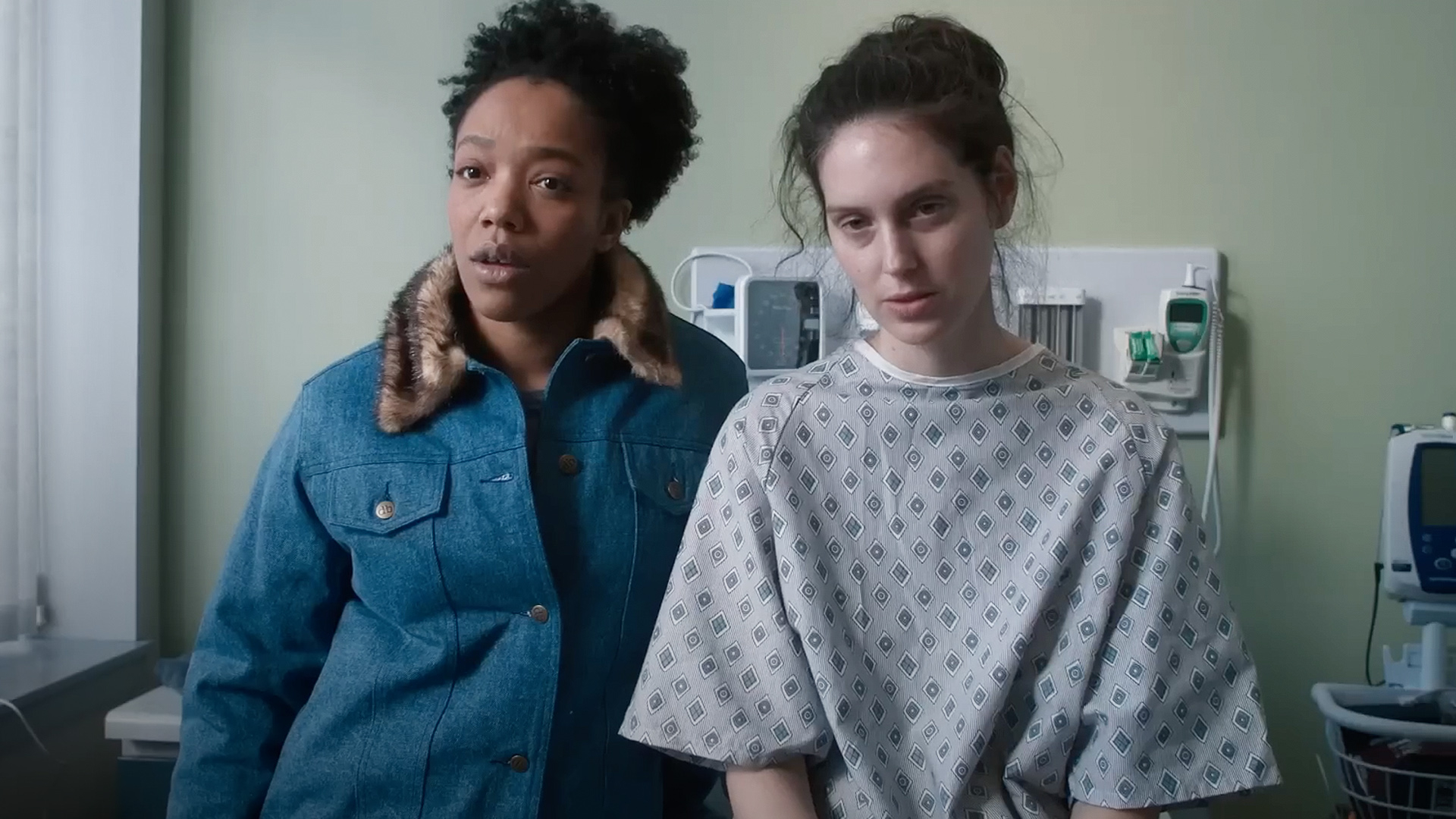
Eva Victor’s directorial debut, Sorry, Baby, was one of the most lauded films to come out of this year’s Sundance Film Festival. Like many other favorites that particular festival has produced over the years, it is an exploration of trauma. But the comedian turned first-time director, and star of the film, approaches the story in a manner that feels both fresh and insightful. Centering on a graduate student navigating through life in the aftermath of a sexual assault, it is certainly not the first movie to take on this difficult subject matter in a post-#MeToo world, but Victor creates something new by choosing to focus more on life after trauma, rather than the traumatizing event itself. In fact, Victor opts not to show the traumatic act on screen, but still allows the viewer to understand what has happened in a way that’s devastating, yet respectful towards both the audience and the character. In an outstanding scene that takes place shortly after the assault, Victor introduces the idea that—contrary to popular screenplay wisdom—sometimes telling and not showing can actually be more powerful. In the end, Sorry, Baby does not lead to some grand reveal or climactic release of emotion. Instead, Victor chooses to simply show the audience how one actually goes through life after an incident like this occurs, and the effectiveness of different coping mechanisms, such as humor. The comedy never feels out of place in this story, though. It only acts as a way for this film to remain uniquely Victor’s throughout, even though it is always understood that this is just one of, unfortunately, far too many similar stories in today’s world.
5. Sinners

The moviegoing sensation of the year, Ryan Coogler’s Sinners was one of the most exhilarating things you could experience inside a movie theater in 2025. A horror film set in Jim Crow Mississippi in the 1930s about art, community, cultural vampirism, and the Black experience in the American South—among other things—Coogler undoubtedly made a lot of movie. It took a director as skilled as him, though, to create such a bountiful, thematically-rich story and still make it one of the most purely entertaining films of the year, and one that demands to be seen on the biggest screen possible. Certain moments—like the film’s central, decade-spanning music scene—immediately became iconic the second they were seen by audiences. Coogler’s most impressive feat, however, remains the way he was able to utilize genre to tell an impactful story about this country’s past, present, and future. The supernatural, horror, and thriller elements of this story do not exist only so this film could be funded as blockbuster entertainment; they were necessary for what Coogler was attempting to unpack. They aided this film’s exploration of identity, cultural survival, exploitation, assimilation, and what one is required to sacrifice in order to gain power or achieve equality.
4. Marty Supreme

When watching Josh Safdie’s Marty Supreme, you’re struck with the overwhelming realization that Timothée Chalamet has been leading audiences to this moment for over a year. In his controversial SAG speech he delivered back in February, he publicly expressed his desire for greatness—that same desire is what consumes his character in this film, Marty Mauser. A fast-talking, pathological hustler and table-tennis phenom living in New York’s Lower East Side in the 1950s, Marty has zero doubt that he will achieve a nearly unattainable level of success, just as the actor who portrays him seems positive of the fact that he can revive old-school movie stardom. We still don’t quite know how Timmy’s journey will end, but we know Marty’s is one littered with chaos, bad decisions, and hardship. Shot and edited in a typical frenzied and propulsive Safdie style, watching Marty obsessively chase his dreams is an enthralling experience. But it is ultimately the motivating factors that are propelling his quest and the ending place Marty finds himself in that make this film so special. A treatise on The American Dream, Safdie was clearly interested in exploring what we sacrifice in the pursuit of success, especially when someone dares to be greater than the position they’ve been placed in. Above all else, though, it is a reminder that all the best art that’s ever been made is about being 23 years old in New York City.
3. Eddington

Ari Aster’s Eddington is a masterclass in how to make a modern movie about what is going on in the world today. To do so, you have to be willing to challenge your audience in order to make your point. Luckily, Aster is a filmmaker who doesn’t mind being polarizing, and seemed happy to bring a wholly cynical and relentlessly bitter mindset to this film about a small town mayoral race that gains steam during the COVID-19 pandemic. For as much as Aster enjoys poking at both sides of the political aisle in this film, he wisely constructs it as an exploration of what it is like for all of us to live underneath sinister, impermeable powers that are much bigger than we are. Using the film’s opening and closing moments to drive home that message, the entire plot feels like a reminder that the more we destroy ourselves, the more these truly powerful forces in our society win. Likewise, the conclusion of Sheriff Joe Cross’ journey also highlights the fact that—similar to much of what we constantly scroll through on our phones every day—the events of Eddington‘s plot were ultimately just a noisy distraction playing out in the backdrop of a far greater crisis. It remains the only film since 2020 that seems to truly understand what a paradigm-shifting force the pandemic actually was.
2. Sentimental Value

There have been countless films made about generational trauma, estranged families, and the emotional wreckage that stems from broken child-parent relationships, but very few have understood those themes with as much clarity as Joachim Trier’s Sentimental Value. Following a filmmaker father, portrayed by Stellan Skarsgård, attempting to reconcile with his actress daughter, played by Renate Reinsve, after the death of her mother, the film is built around people who rely on art as their primary means of communication. When words can’t provide the proper connection, they turn to creative expression, as evidenced by the fact that Gustav (Skarsgård) attempts to fix things with his daughter by casting her in a film based on his life. What makes this film so emotionally devastating is its understanding of family dynamics, particularly between siblings raised in broken households by complicated parental figures. In one of the most heartbreaking and resonant scenes of the year, Nora (Reinsve) essentially asks her younger sister how she was able to get through their childhood emotionally unharmed, to which Agnes replies, “There was one difference between our childhoods: I had you.” It is a simple sentiment with the power to bring anyone with a sibling to tears immediately. But it also examines the idea that one sibling will often feel compelled to hold it together on the outside if the other is visibly struggling, despite the fact that they are probably feeling the same pain. Profound and poignant observations like these are littered throughout Sentimental Value, making it one of the most vulnerable and raw viewing experiences 2025 had to offer.
1. One Battle After Another

For me, no 2025 cinematic event was able to match the heights of Paul Thomas Anderson’s One Battle After Another. A movie not just for the year, but the entire decade, PTA’s latest is the greatest blend of masterful performances, directing, composing, pacing, and emotion I have seen in recent memory. From its opening moments, the film showcases brilliant filmmaking to announce itself as a story about America as it is and where it may be heading. For all of its commentary on our current moment, though, this film is ultimately driven by the central father-daughter relationship that grounds the film’s grand ambitions in something deeply human. Along with the rest of the cast, Leonardo DiCaprio and Chase Infiniti bring an immensely vulnerable, comedic, and touching quality to this story. The mishap-filled journey Leo’s character goes on to recover his daughter, and where they find themselves at the end, drives home the film’s idea that no single generation will ever solve the world’s problems, but it is on each generation to try. Though the issues will continue to be inherited, our only hope is that we continue to crack away through proper resistance. Whether or not you believe in what PTA is trying to say, that final scene and needle drop will have you leaving the theater thinking a better tomorrow is within reach. That’s the power of The Movies.

 Not A Real Person Yet
One thought on “The Top Ten Films of 2025”